In this article:
Your car's Vehicle Identification Number (VIN) is more than just a random string of letters and numbers. It's a unique fingerprint that tells the story of where your car was born, what engine it has, and even when it rolled off the assembly line.
What is a VIN?
Since 1981, every vehicle sold in the United States has been required to have a 17-character VIN. Before that, formats varied by manufacturer. The modern VIN system is standardized by the ISO 3779 standard.
Note: VINs never include the letters I, O, or Q to avoid confusion with the numbers 1 and 0.
Want to skip the manual breakdown? You can decode your VIN instantly with our free tool, or read our companion guide on how to decode a VIN step by step.
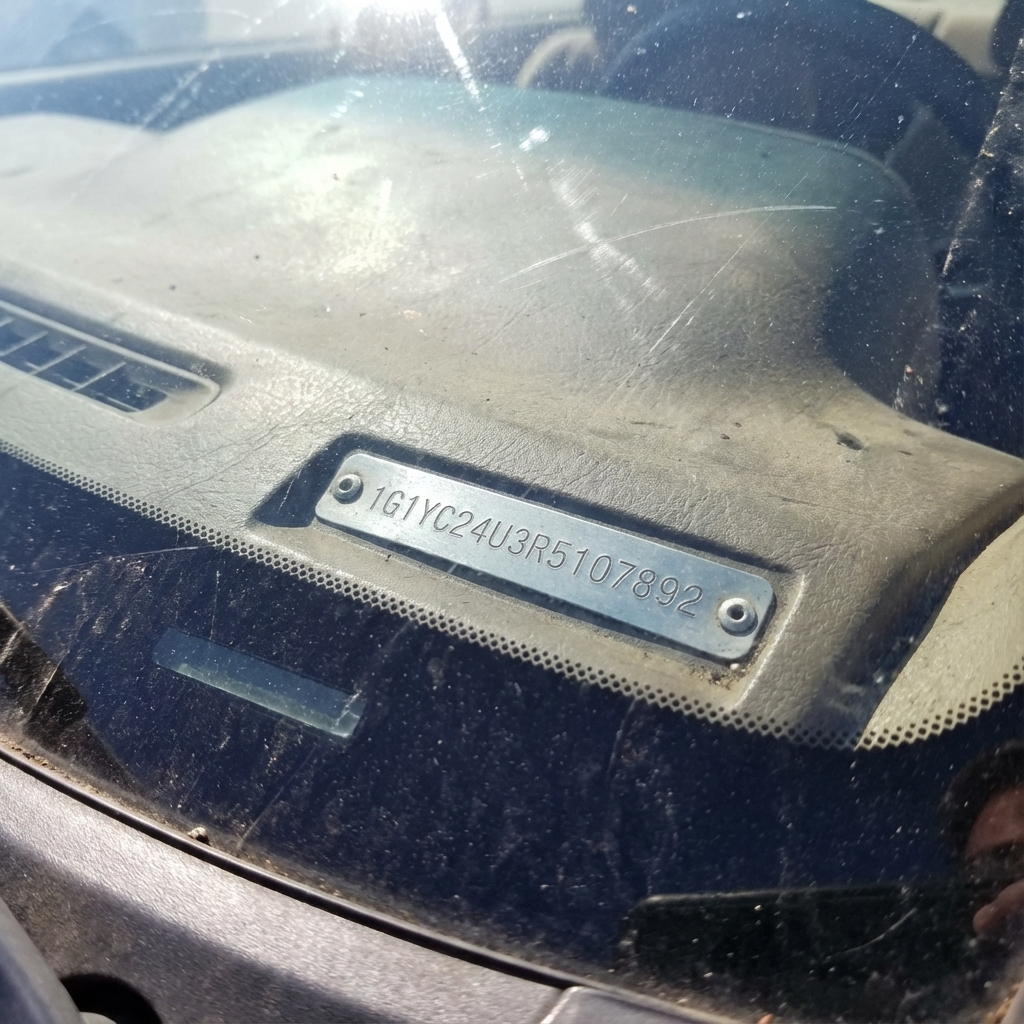
Where to Find It
The most common places are the driver's side dashboard (visible through the windshield) and the driver's side door jamb sticker. You can also find it on your registration and insurance card.
Characters 1-3: World Manufacturer Identifier (WMI)
The first three characters tell you where the car was made and who made it.
- 1st Character (Country): 1, 4, or 5 = USA; 2 = Canada; 3 = Mexico; J = Japan; K = Korea; W = Germany.
- 2nd Character (Manufacturer): G = GM; T = Toyota; B = BMW; H = Honda.
- 3rd Character (Vehicle Type): Identifies the division or vehicle type (e.g., truck vs. passenger car).
Characters 4-9: Vehicle Descriptor Section (VDS)
This section describes the vehicle's features.
- Characters 4-8: These identify the model, body style, restraint system, transmission type, and engine code. This is crucial when you find car parts by VIN so you order the exact fit.
- 9th Character (Check Digit): This is a security code used to verify the VIN's authenticity using a mathematical formula.
Characters 10-17: Vehicle Identifier Section (VIS)
This is the unique serial number for your specific car.
- 10th Character (Model Year): A code indicating the year. For example, L = 2020, M = 2021, N = 2022.
- 11th Character (Plant Code): Indicates the specific factory where the vehicle was assembled.
- Characters 12-17 (Sequential Number): The production sequence number. This is often used to identify recalls for specific batches of vehicles.