In this article:
The single most common reason auto parts get returned is that they don't actually fit — and it usually isn't the buyer's fault. It's that "2019 Honda Civic" isn't specific enough. The dependable way to know a part fits your car is to check it against your VIN.
Why "fits my year/make/model" isn't enough
A single model year of one vehicle can ship with several engines, trim levels, drivetrains (FWD/AWD), brake packages and region-specific builds — and those variations often take different parts. A year/make/model dropdown can't see which of those you actually have, so it shows parts that fit most of that model, not yours. Industry data puts that kind of matching at roughly 70–80% accuracy, which is exactly why a large share of online parts orders come back. We dug into that in why auto parts get returned.
Why the VIN is the reliable test
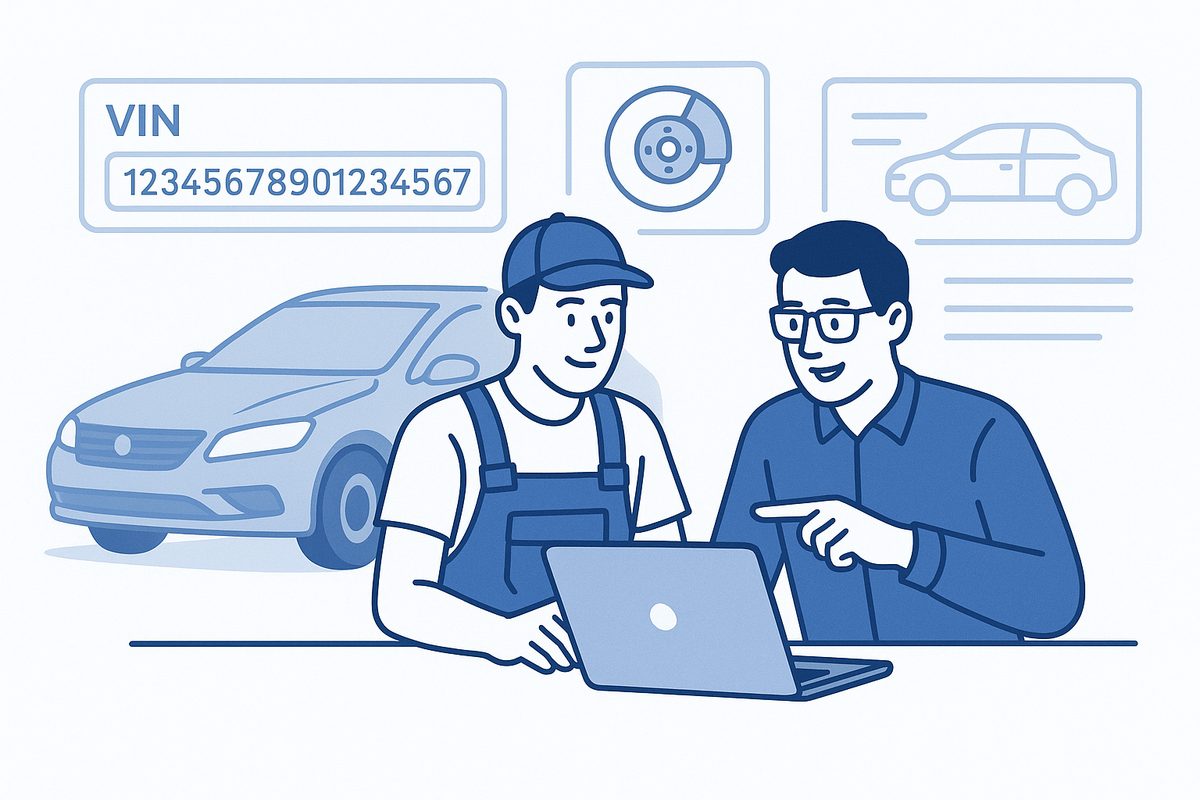
Your Vehicle Identification Number is a 17-character code standardized under ISO 3779 that encodes your vehicle's exact build — manufacturer, model, engine, restraint system, and the serialized details that separate your car from an otherwise-identical one. Because of that, matching a part to the VIN (rather than the model) is what gets you to dependable fitment. VinSnap's VIN-based matching reaches 99.8% fitment accuracy across a 1.2M-part TecDoc catalog. If you want the character-by-character breakdown, see how to read a VIN.
The one rule
If a part can vary within your model year — brakes, sensors, filters, suspension, electrical — verify it against your VIN before buying. The few seconds it takes is cheaper than a return.
How to check fitment, step by step
- Find your VIN. Driver-side dashboard (through the windshield), the driver-side door-jamb sticker, or your registration/insurance.
- Decode it. Run the VIN to confirm the exact make, model, engine and trim so you know the build you're matching against — the VIN decoder does this instantly.
- Search parts by VIN. Use a VIN-based search so every result is pre-filtered to your exact vehicle — search car parts by VIN (free, no signup).
- Confirm the specific listing references your vehicle before you check out. This last look is what eliminates the wrong-part return.
Prefer a guided walkthrough with screenshots? See how to find car parts by VIN, or jump straight to the find-parts-by-VIN hub.
Common fitment mistakes to avoid
- Assuming trims share parts. A base and a sport trim of the same year can take different brakes, wheels and suspension.
- Ignoring engine/drivetrain. Many parts differ between engine options or FWD vs AWD.
- Buying on a photo. Visual similarity isn't fitment — confirm the part references your VIN-decoded build.
- Skipping OEM cross-reference. If you have an OEM part number, cross-check equivalents with the cross-reference tool.